
“If we confess our sins, He is faithful and just and will forgive us our sins and purify us from all unrighteousness.” – 1 John 1:9
Why Lenten Reconciliation Still Matters
There may be a temptation to treat Reconciliation as a box to check before Easter. You know the theology. You know the Church’s expectation. So you go, you confess the usual, and you move on to the Triduum. But Lent keeps inviting us back to this sacrament for reasons that go deeper than obligation.
It interrupts the drift. Most of us don’t fall away from God dramatically — we drift. Lent names that drift and gives it a shape. The examination of conscience required for a good confession forces a kind of honest accounting that ordinary life rarely creates space for. That discomfort is spiritually productive.
The graces are real and specific. Reconciliation isn’t just absolution — it confers actual sacramental grace ordered toward healing the particular wounds sin leaves behind. Receiving it during Lent, when the whole Church is oriented toward penance and renewal, situates that grace within a larger movement of the Body of Christ.
It prepares you to receive Easter, not just observe it. There’s a difference between watching the Resurrection and being drawn into it. Coming to the Easter Vigil or Easter Sunday in a state of grace — freshly reconciled — changes how you receive the Eucharist, how the whole Paschal mystery lands.
Habitual sin needs habitual confrontation. The confessor, the formula, the penance — these aren’t bureaucratic. They’re medicinal. Returning to them annually at minimum keeps the spiritual senses from going fully numb to what sin actually costs.
Lenten Reconciliation, at its best, isn’t just preparation for Easter. It is a participation in it — dying to something real, so the Resurrection means something real too.
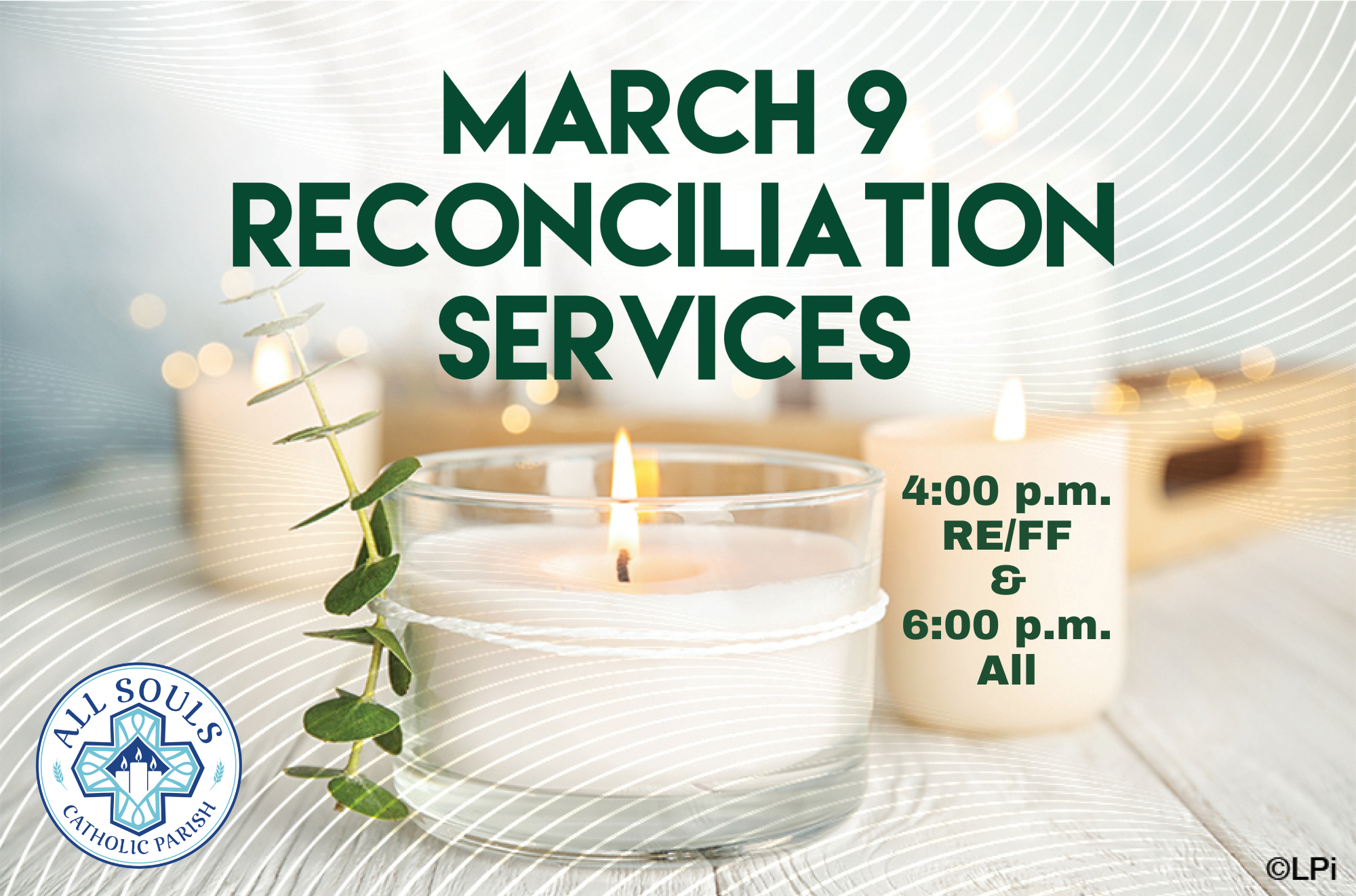
We hope you will join us at 6:00 p.m. on Monday, March 9. Religious Education/Faith Formation students and families are welcome at 4:00 p.m.
